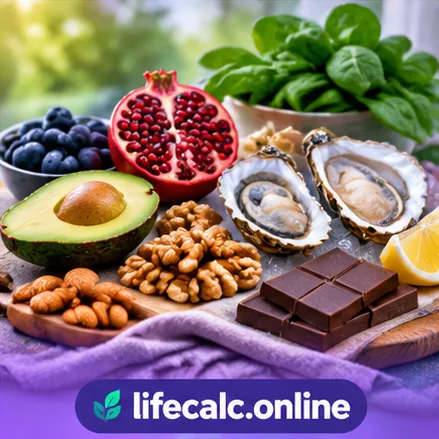
If you searched for foods for men’s sexual health, you probably want practical answers rather than exaggerated promises. This guide explains what the evidence supports, how to use the information safely, and what to do next. You will find realistic examples, common mistakes, frequently asked questions and links to useful LifeCalc tools. It is written for adults seeking general education, not an individual diagnosis or treatment plan.
Quick answer: what matters most
Sexual function involves blood flow, nerves, hormones, relationships and psychological well-being. Diet is one influence on overall cardiovascular and metabolic health, not a guaranteed treatment for sexual difficulties. Because erection problems can sometimes reflect vascular health, a heart-supportive eating pattern is a sensible foundation. No particular fruit, spice or supplement has been proven to work like a prescription treatment.
Vegetables and fruit
Colorful vegetables and fruit supply fiber and a variety of nutrients. Leafy greens, berries, citrus and tomatoes can be part of a balanced eating pattern. Choose options you enjoy and can afford; frozen produce can be convenient. The benefit comes from consistent dietary patterns, not from eating a single “superfood” before sex.
Whole grains and legumes
Oats, brown rice, whole-grain breads, lentils and beans can support a fiber-rich diet. Replacing some refined grains with whole grains may help overall cardiometabolic health. Beans and lentils also provide plant protein. A simple meal of beans, vegetables and a whole grain is a practical example. There is no need to purchase specialty products marketed for male performance.
Fish, nuts and healthy fats
Fish, nuts, seeds and unsaturated oils can fit into heart-healthy dietary patterns. Choose portion sizes that suit your energy needs and dietary restrictions. Salmon, sardines, walnuts and olive oil are familiar examples, but no single item guarantees improved libido or erections. People with allergies or specific medical needs should adapt food choices accordingly.
What about oysters, chocolate and watermelon?
These foods often appear in lists of aphrodisiacs. Oysters contain zinc, and cocoa and watermelon contain various compounds, but eating them has not been shown to reliably treat erectile dysfunction. Nutrient deficiencies should be assessed rather than guessed. Treat dramatic claims about immediate sexual performance with skepticism, especially when they are attached to a product sale.
Lifestyle matters beyond the plate
Regular movement, sufficient sleep, avoiding tobacco and managing chronic health conditions can support cardiovascular and sexual health. Excess alcohol may impair sexual function. Stress, anxiety and relationship concerns can also play a role. A healthy meal cannot compensate for untreated diabetes, high blood pressure or persistent symptoms that require medical attention.
A realistic one-day meal example
Breakfast: oats with yogurt and berries. Lunch: lentils or chicken with vegetables and whole-grain bread. Dinner: fish or tofu, vegetables and rice. Snacks might include fruit or nuts if needed. This is an illustrative balanced pattern, not a medical diet or a promise of improved sexual performance. Adapt it to your preferences, budget and dietary requirements.
Treat the example as a flexible starting point, not a mandatory target. Adjust it for your ability, health needs, schedule and preferences. If a change causes pain, persistent fatigue or other concerning symptoms, stop and seek individualized advice. Small, sustainable changes are easier to evaluate than changing everything at once.
When to see a healthcare professional
Persistent erection problems, painful symptoms, changes in sexual desire or concerns about fertility deserve appropriate evaluation. Erectile dysfunction can have cardiovascular, medication-related or psychological causes. Do not delay assessment while trying foods or unregulated supplements. A clinician can discuss safe, evidence-based options and check for underlying conditions.
How to put this information into practice
Step 1: Define a specific, realistic goal
Start with one question related to foods for men’s sexual health that you can actually answer or measure. Avoid goals based on dramatic advertising claims. Note your current habits, symptoms or training pattern before making changes. This baseline makes it easier to identify what is useful and what needs professional input.
Step 2: Choose one manageable change
Choose an action that fits your circumstances, whether that means scheduling regular activity, preparing balanced meals, tracking symptoms or arranging a medical appointment. Make changes gradually and give yourself time to assess them. If your goal involves a medical symptom, do not use lifestyle changes as a reason to postpone appropriate care.
Step 3: Review outcomes and adjust
Check progress after a reasonable interval using meaningful indicators rather than a single number. Consider comfort, consistency, sleep, energy and any relevant symptoms. Not every improvement is linear, and lack of progress does not automatically mean you need a stronger supplement or harder workout. Seek professional guidance when uncertainty or health concerns remain.
Common questions and misunderstandings
Online health advice often presents one technique, food or measurement as a complete solution. In reality, health outcomes depend on multiple factors, and individual needs differ. Be cautious of testimonials presented as proof, claims of guaranteed results and advice that discourages medical evaluation. Prefer established public-health and clinical sources over anonymous marketing pages.
Related LifeCalc calculator
Waist Hip Ratio Calculator — use this as an educational estimate, not a clinical test or a substitute for individual advice.
How to assess diet claims online
Check whether a claim comes from human clinical research or only a laboratory experiment. A nutrient being involved in normal body function does not mean that taking more improves sexual performance. Look for clear outcomes, meaningful comparisons and potential conflicts of interest. Be particularly skeptical of advertisements promising immediate results or claiming a food is equivalent to medication. A sustainable heart-healthy pattern is a more defensible goal than an unverified aphrodisiac.
A short checklist before you act
Identify the question you want answered. Check whether the advice is based on reputable clinical or public-health guidance. Consider your health conditions, medications, goals and practical constraints. Make one sensible change at a time, and record how it affects you. If symptoms persist or the decision involves medical treatment, consult a qualified healthcare professional. Do not rely on a calculator result, single anecdote or marketing claim as proof.
Frequently asked questions
Can food cure erectile dysfunction?
No single food is a proven cure. Diet can support general cardiovascular health but does not replace medical assessment or treatment.
Are oysters a proven aphrodisiac?
There is insufficient evidence that eating oysters reliably improves sexual performance.
Does heart health matter for erections?
Yes. Healthy blood vessels and circulation are relevant to erectile function.
Should I take sexual wellness supplements?
Discuss products with a clinician; some are ineffective, interact with medications or contain undisclosed ingredients.
References and further reading
Conclusion: take the next useful step
The best response to foods for men’s sexual health is to focus on credible information and realistic action rather than quick fixes. Use the relevant LifeCalc calculator to explore an estimate where appropriate, and consult a qualified professional when symptoms, medicines or existing health conditions affect your choices. Consistency and informed decisions are more useful than dramatic promises.
Medical editorial disclosure: LifeCalc provides general educational information. This article has not been independently reviewed or approved by a licensed clinician. It does not establish a diagnosis or replace individualized medical advice.